Most academics have their work scattered across a departmental bio, a Google Scholar page, an ORCID record and a CV that is three years out of date. Building a personal site means either a weekend with a static site generator or nothing, and it is almost always nothing. getScholarSite takes the CV and returns the site.
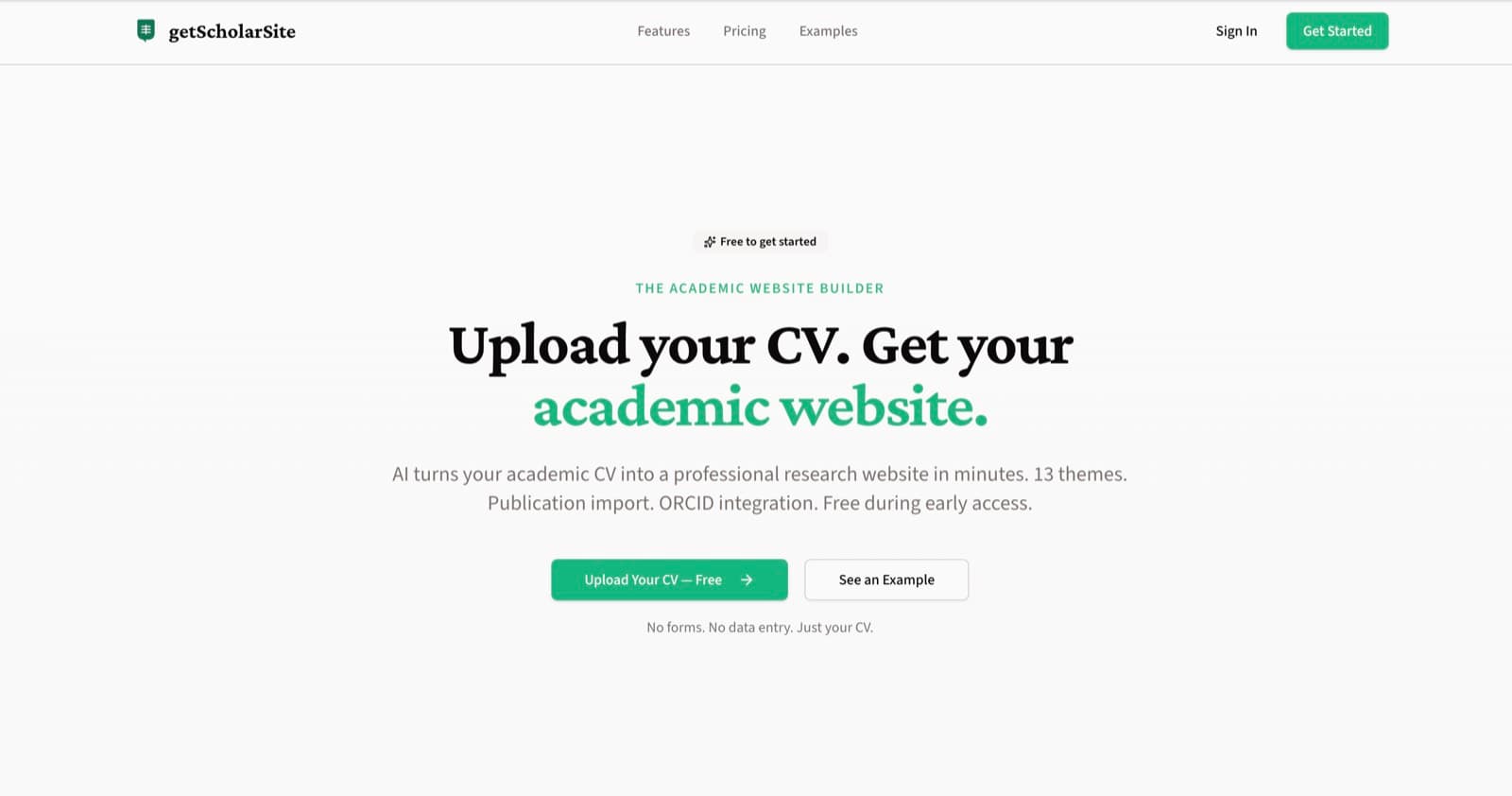
The pitch is the whole product. No forms, no data entry, just the CV.
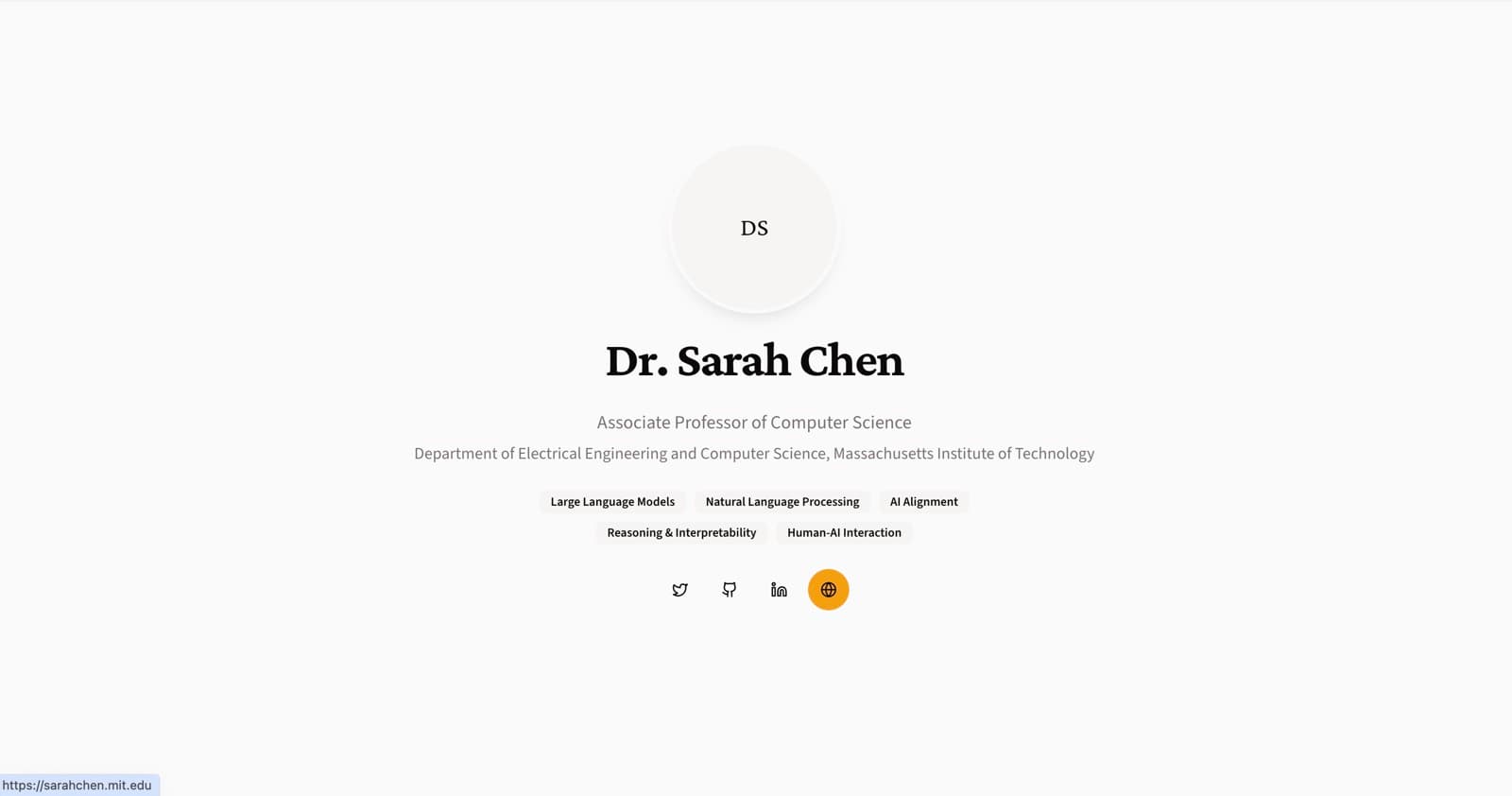
A generated site. Research interests, links and biography, laid out for a researcher rather than a startup.
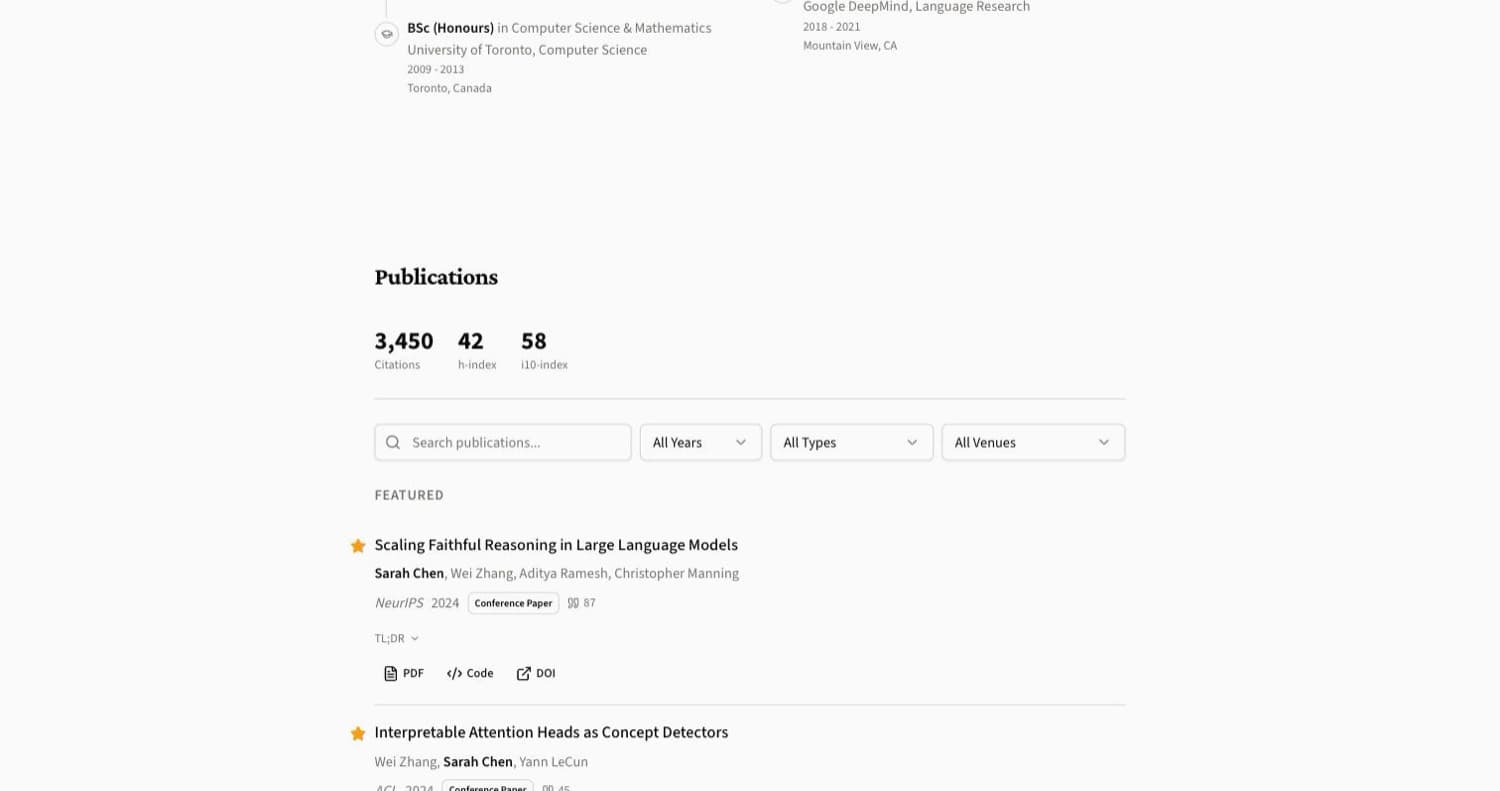
Publications arrive with citation counts, h-index and i10-index, searchable and filterable by year, type and venue, each paper carrying its PDF, code and DOI.
What it does
The CV is the input. Upload a PDF or Word document and publications, education, grants and awards are extracted from it. No forms, no re-typing a career into a CMS.
Publications from wherever they already live. Pull from the CV, from BibTeX exported out of Google Scholar, or from an OpenAlex search, with duplicates merged rather than stacked.
A site, not a link list. Bio, research interests, education, experience, publication metrics, grants, awards, lab members, open positions, courses, announcements, media mentions and an FAQ. The sections an academic page actually needs, including the recruiting ones.
Thirteen themes, each built for research pages rather than adapted from a startup landing template.
Findable and yours. A custom domain or a free subdomain with SSL, structured data and meta tags so the page is indexed properly, and analytics for views and sources.
What I built
The whole product, on Next.js and Supabase.
The extraction pipeline that turns an unstructured CV into structured publications, grants, education and awards.
Publication import and deduplication across CV text, BibTeX and OpenAlex, which is the messy part: the same paper arrives three times with three different author strings.
The theme system, custom domains with SSL, and the analytics dashboard.