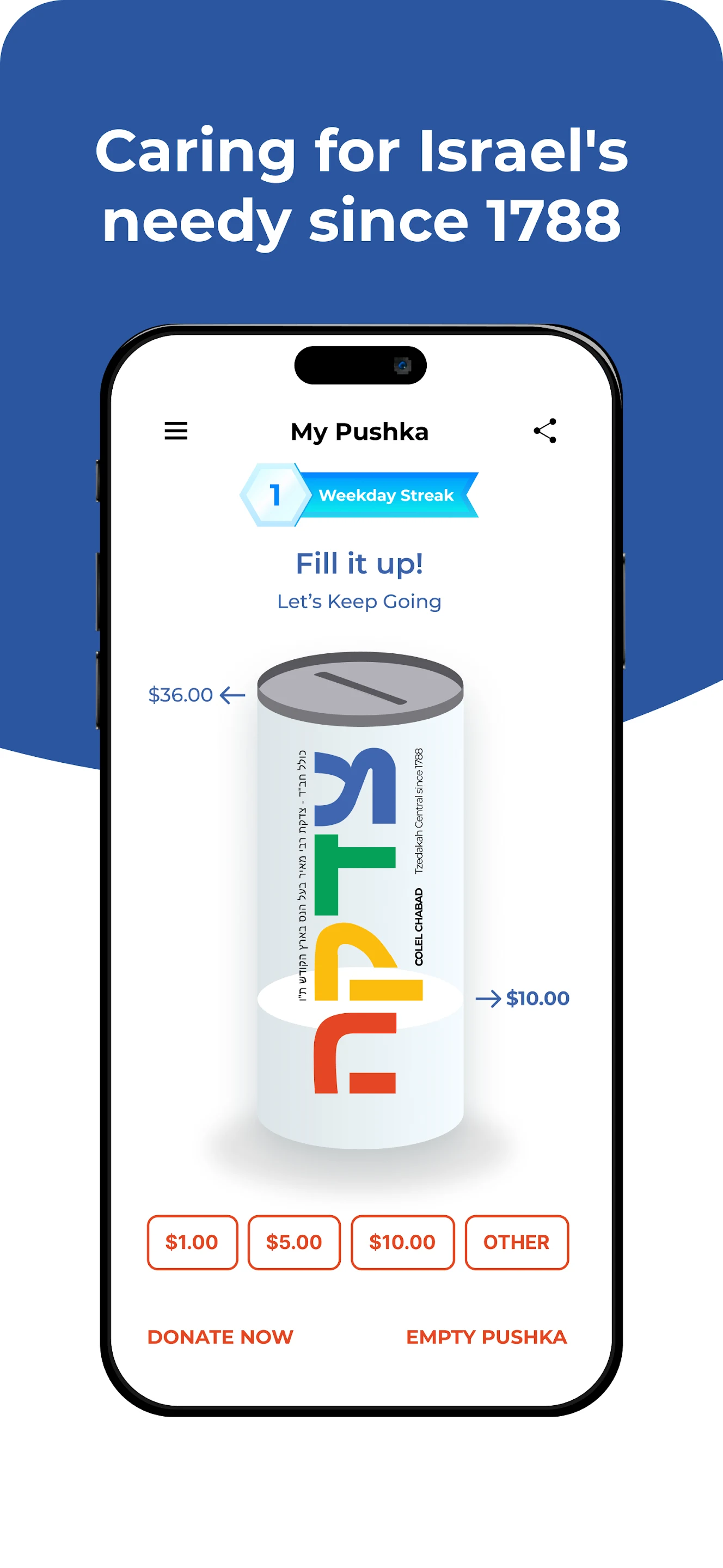
A pushka is the tin charity box that sits on a kitchen shelf. This is that box, in a phone, for Colel Chabad, who have been supporting Israel's poor since 1788. You tap to give, the box fills up, and when it reaches your goal you empty it and start again.
The box fills as you give. Presets, a goal, and a streak, because the habit is the product.
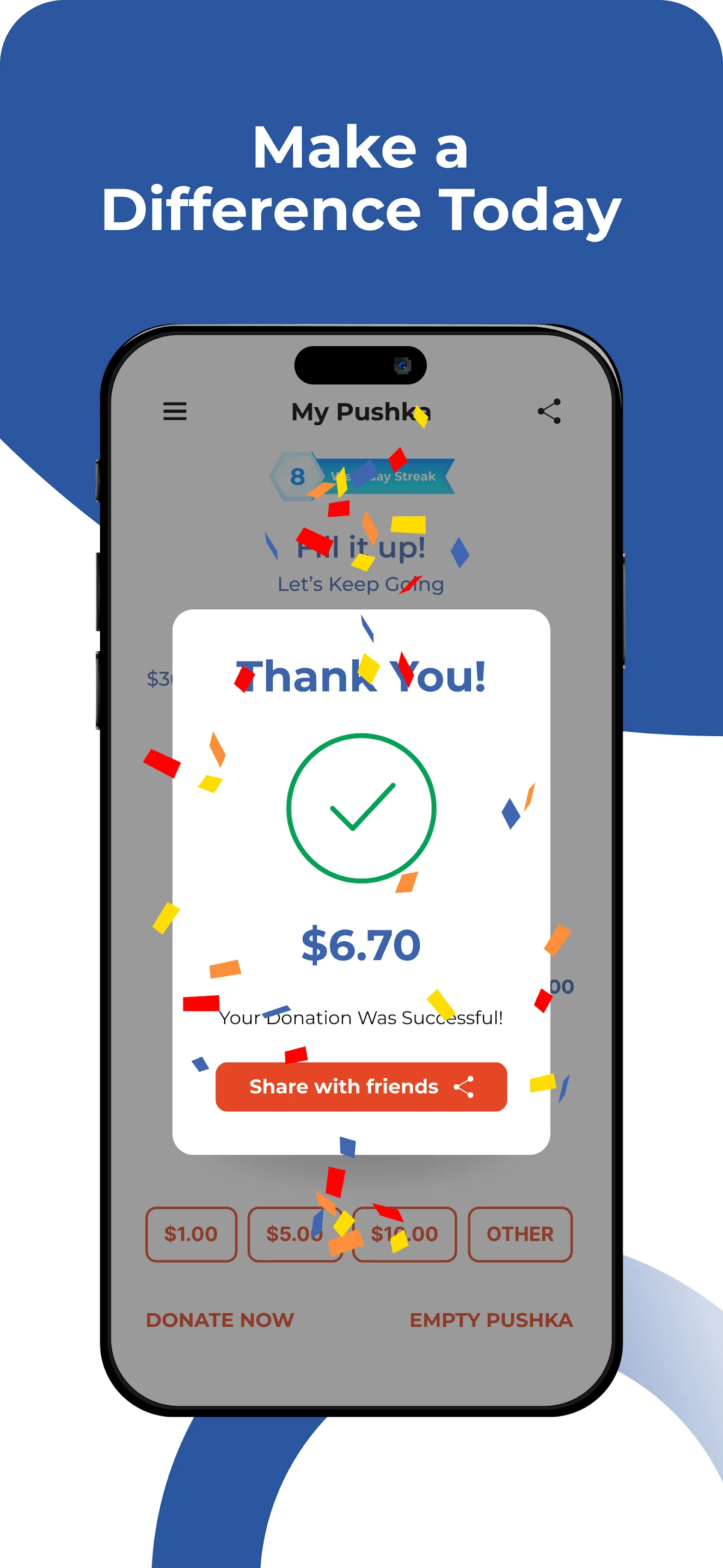
Giving is meant to feel like something, so the confirmation does too.
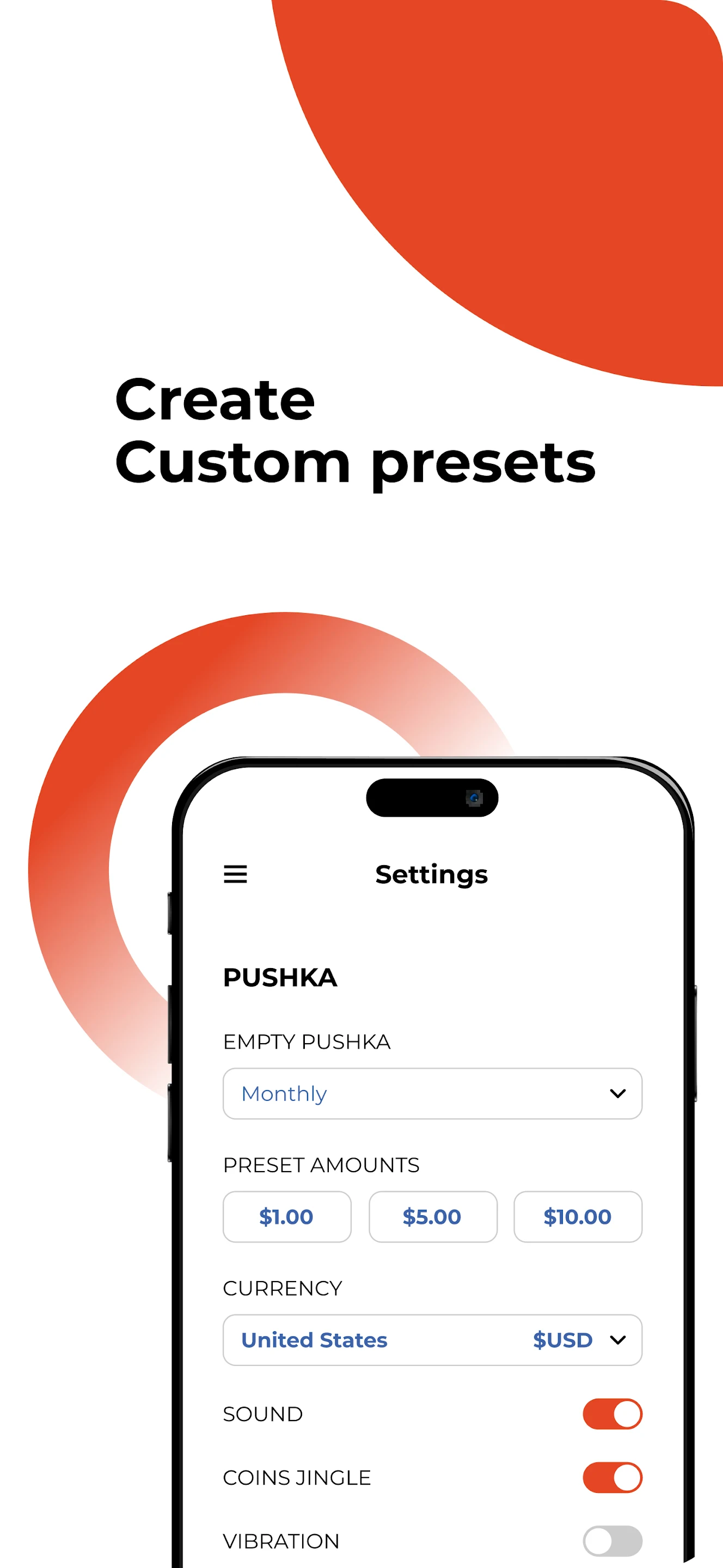
Presets, currency, and the coin jingle. Sound and vibration are the physical box, carried over.
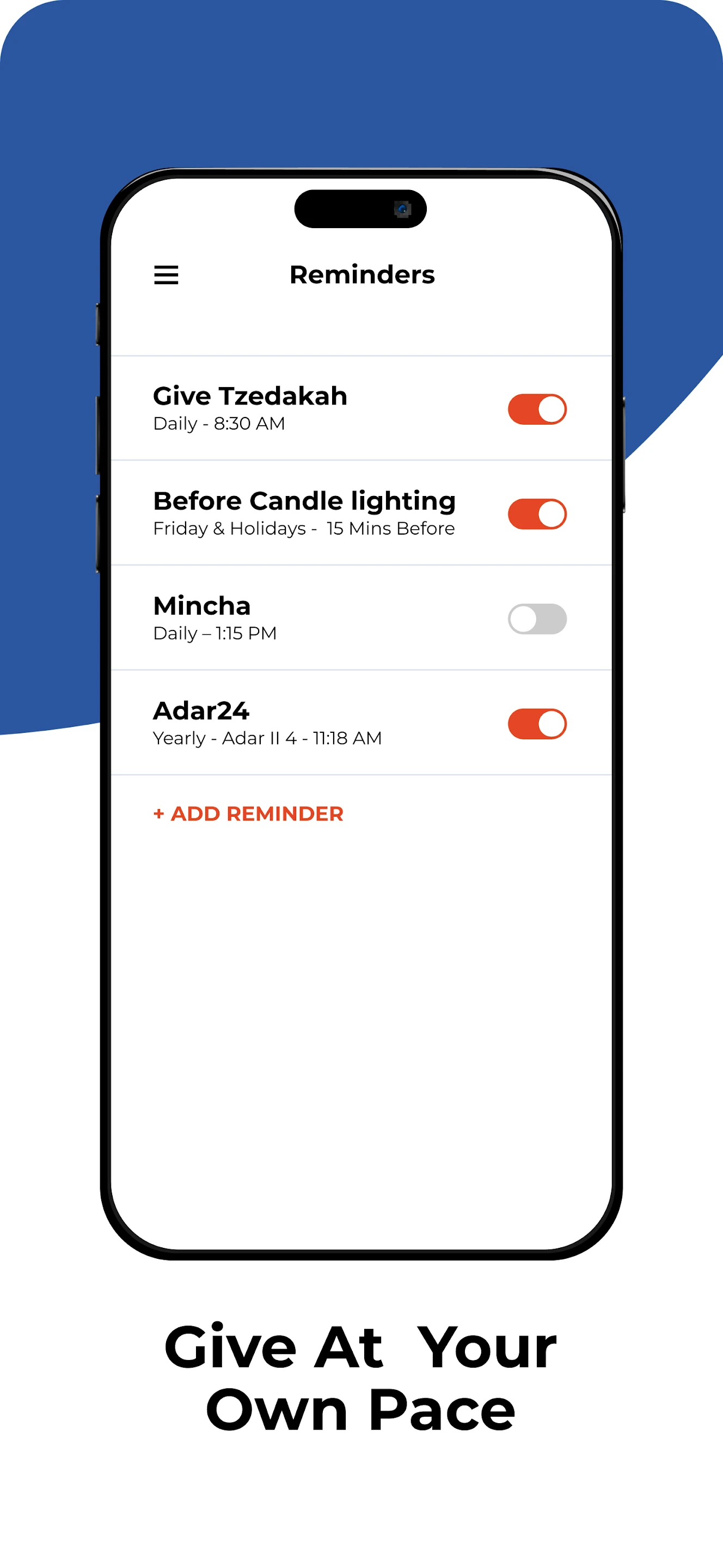
Reminders run on the Hebrew calendar: candle lighting, Mincha, and a yearly date in Adar II.
What it does
Giving is a tap, not a checkout. Set presets, tap to drop in a dollar or ten, and watch the box fill toward a goal you chose. The friction that stops small, frequent giving is forms, so there are none.
The physical box, carried over. Coins jingle, the phone buzzes, confetti lands on a completed donation. These are not decoration; they are what makes a digital pushka feel like the object it replaces.
Reminders on the Hebrew calendar. Daily tzedakah, before candle lighting on Fridays and holidays, Mincha, and yearly dates like the 4th of Adar II. Candle lighting moves with sunset and location, and Adar II only exists in a leap year, so this is a real calendar problem rather than a cron job.
A pushka in your pocket 24/6. Six, not seven: the app is built around observance, not around maximising transactions.
Beyond the box. A home screen widget, a Wear OS app for giving from the wrist, a maaser calculator for tithing 10% or 20% of earnings, personal notes attached to a donation, and streaks that survive a missed day.
Built for bad connections. Donations queue offline and reconcile when the network returns, because giving happens in shul and on the move.
What I built
The app, in Flutter, shipped to the Play Store under Colel Chabad.
Payments through Stripe, on a Node.js and Firebase backend, with multi-currency giving and recurring emptying schedules.
The reminder and calendar engine, including sunset-relative and Hebrew-calendar scheduling.
The companion surfaces: home screen widget and the Wear OS app.